CELPIP® Speaking Task 5 sample: Room for Visiting Relatives
Comparing and Persuading · Choose: 60 seconds · Preparation: 60 seconds · Response: 60 seconds · Published
Original practice questions in CELPIP® task formats, created independently by CELPIP Study.
Practice question
You're arranging a four-night visit to Stratford for your cousin and his partner. They will pay for their accommodation and have a total budget of $600. They want to cook some meals and stay near your apartment. His partner will attend two evening online classes, so having separate space would help. Consider these two places and choose the accommodation you would recommend.
Furnished Guest Suite
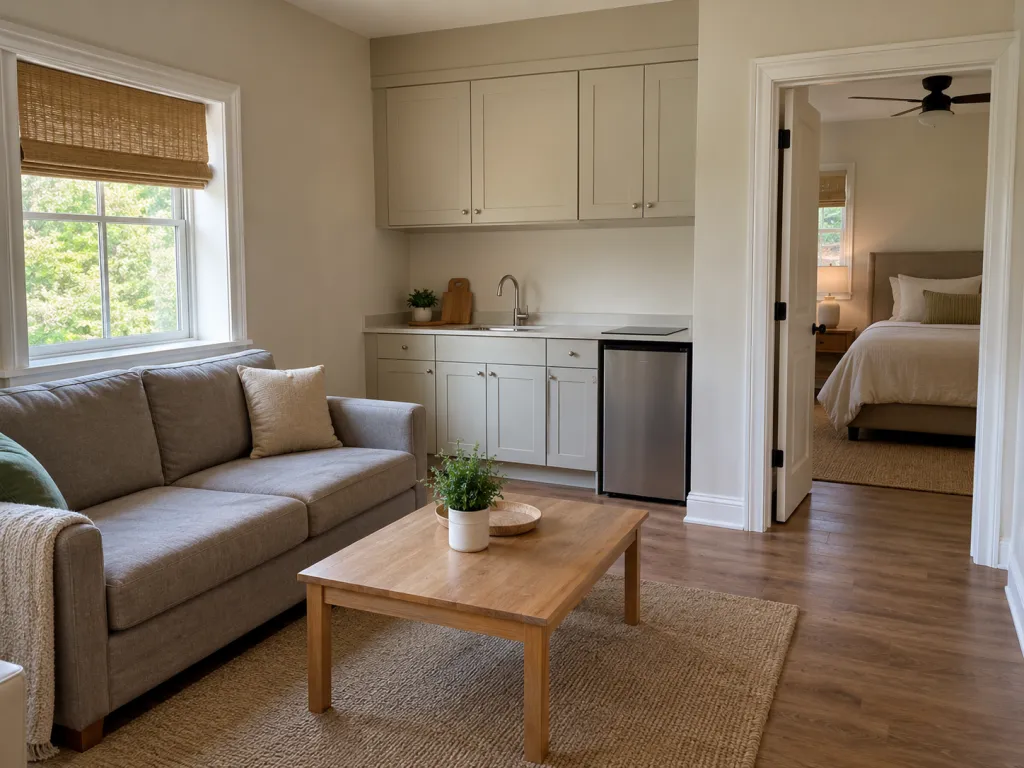
- $560 total for four nights
- 2 km from your apartment
- Private kitchenette
- Separate bedroom and sitting area
Guesthouse Room
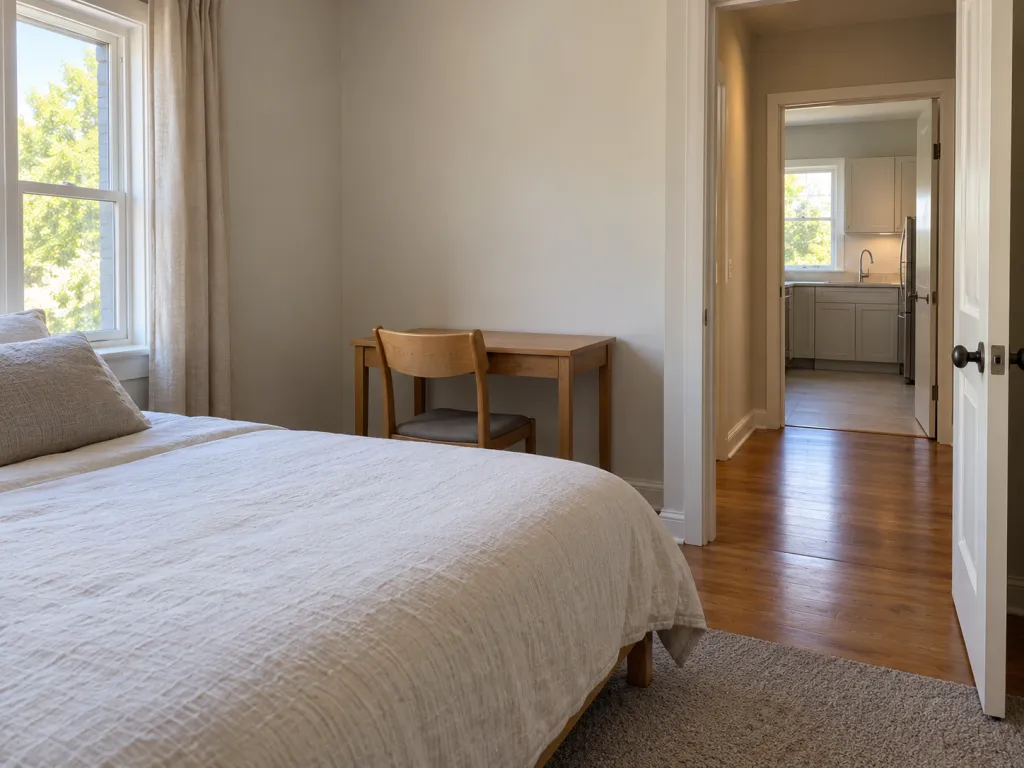
- $440 total for four nights
- 0.5 km from your apartment
- Shared kitchen
- One bedroom with a small desk
Your friend’s alternative
Hotel Room
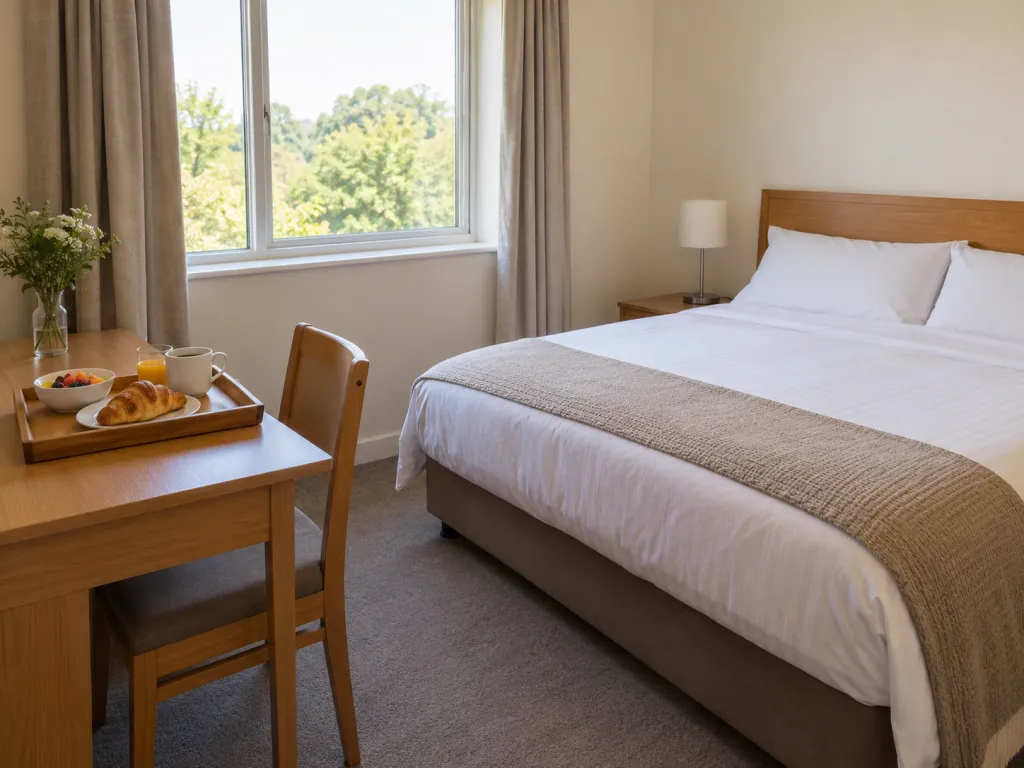
- $600 total for four nights
- 1 km from your apartment
- Breakfast included; no kitchen
- One room with a desk
Your cousin, Yaroslav, suggests the Hotel Room because breakfast is included and it's closer to your apartment than the guest suite. Persuade him that the accommodation you chose would suit his visit better, while taking his reasons into account.
Model answers
These are transcripts of a model response, provided for comparison with your own recording.
The models choose Furnished Guest Suite before responding to the friend’s alternative.
Level 7 sample answer
115 words
Yaroslav, the hotel sounds comfortable, and having breakfast ready would be convenient. But I think the Furnished Guest Suite would work better for you both. It has a separate bedroom and sitting area. Your partner can attend classes in evening while you use the other room. At the hotel, you'd both be in one room. Also, the suite has a kitchenette, so you won't need buy every meal. I mean, breakfast at the hotel is useful, but you still need lunch and dinner. The suite costs $560, which is $40 less. It's farther from my apartment, but I think the extra space is more useful during four nights. Would you consider booking the suite instead?
Why this answer is at level 7
The level 7 answer gives a clear recommendation supported by relevant facts about space, cooking and cost. Its reasoning is mostly straightforward, with broad vocabulary and some grammatical slips; the higher-level answers explain the practical trade-offs more precisely.
Your partner can attend classes in evening while you use the other room.
— Content/Coherence: This connects the separate rooms directly to the evening classes. The level 9 answer develops the consequence further by explaining how sharing a hotel room could restrict Yaroslav's activities.I think the extra space is more useful during four nights.
— Vocabulary: The meaning is clear, but “more useful” is broad and “during four nights” sounds awkward. The higher-level answers use more precise language to explain comfort, flexibility and how the layout serves both visitors.Also, the suite has a kitchenette, so you won't need buy every meal.
— Listenability: The simple cause-and-effect structure is easy to follow, but the missing “to” after “need” interrupts the natural phrasing. The level 9 answer expresses the cooking advantage more smoothly.Yaroslav, the hotel sounds comfortable, and having breakfast ready would be convenient.
— Task Fulfillment: The friendly opening acknowledges Yaroslav's breakfast argument before recommending the suite. The answer also addresses distance later, but the higher-level responses acknowledge his exact distance advantage more explicitly.
Level 9 sample answer
143 words
Yaroslav, I agree that included breakfast would make your mornings easier, and the hotel is a kilometre closer to my apartment. Still, I'd recommend the Furnished Guest Suite, mainly because of those two evening classes. In a single hotel room, you'd have to keep quiet while your partner studies, even if you wanted to watch something or make a call. With a separate bedroom and sitting area, you could each have some space. The private kitchenette is another practical advantage. Since you want to cook some meals, it would give you that option throughout the visit. Hotel breakfast is helpful, but it doesn't cover lunch or dinner. The suite also costs $560 rather than $600, leaving $40 of your accommodation budget. Being two kilometres away is a compromise, but for four nights, I'd put comfort and flexibility first. Shall we choose the suite?
Why this answer is at level 9
The level 9 answer develops practical consequences, acknowledges both hotel advantages and explains why the suite better fits the visit. Its clear, accurate language improves on level 7, while level 11 makes the comparison more distinctive through sharper contrasts and a more unified argument about independence.
In a single hotel room, you'd have to keep quiet while your partner studies,
— Content/Coherence: This develops the room-layout fact into a concrete inconvenience for Yaroslav. It goes beyond level 7's basic explanation; level 11 sharpens the reasoning further by distinguishing a place for a laptop from separate space for another person.Being two kilometres away is a compromise, but for four nights, I'd put comfort and flexibility first.
— Vocabulary: “Compromise” and “comfort and flexibility” express a clear judgment about competing needs. Level 11 makes these ideas more concrete through language about surrendering the room and preparing meals around their plans.Hotel breakfast is helpful, but it doesn't cover lunch or dinner.
— Listenability: This short contrast is easy to follow aloud and makes the food argument immediately clear. Level 11 uses more varied sentence patterns and connects meal preparation to a broader argument about independence.Yaroslav, I agree that included breakfast would make your mornings easier, and the hotel is a kilometre closer to my apartment.
— Task Fulfillment: The opening accurately acknowledges both reasons behind Yaroslav's preference. The answer then addresses classes, cooking and budget; level 11 strengthens the persuasion by explicitly weighing what they would gain and give up.
Level 11 sample answer
176 words
Yaroslav, I understand the attraction: breakfast is taken care of, and you'd be a kilometre closer to my apartment. If convenience were the only consideration, the hotel would be tempting. But two of your four evenings include an online class, so I'd choose the Furnished Guest Suite. A desk gives your partner somewhere to put a laptop; it doesn't give you somewhere else to spend the evening. With a separate bedroom and sitting area, neither of you would have to surrender the whole room to the class. That distinction could make a short visit feel much less cramped. The kitchenette offers a similar kind of independence: instead of having one meal provided, you'd be able to prepare whichever meals suited your plans. We'd be trading an included breakfast and a shorter distance for flexibility throughout the stay. At $560, the suite also leaves $40 in your budget, whereas the hotel uses every dollar. I wouldn't dismiss the extra kilometre, but I'd accept it for a layout that accommodates both of you. Can we recommend the suite?
Why this answer is at level 11
The level 11 answer builds a persuasive argument around how the couple would actually share the accommodation. Precise contrasts, varied phrasing and an explicit weighing of breakfast, distance, space and budget make its recommendation thoughtful and convincing.
A desk gives your partner somewhere to put a laptop; it doesn't give you somewhere else to spend the evening.
— Content/Coherence: This distinguishes the hotel's desk from the suite's separate living space. It explains why the hotel feature does not fully meet the couple's needs and makes the class-related argument more insightful than in the other answers.neither of you would have to surrender the whole room to the class.
— Vocabulary: “Surrender the whole room” vividly expresses the inconvenience of sharing one space during a class. The wording is memorable while remaining directly connected to the accommodation decision.If convenience were the only consideration, the hotel would be tempting.
— Listenability: This compact conditional creates a natural pause between acknowledging the hotel's appeal and introducing the suite's advantages. Its sentence pattern adds variety and helps the listener follow the shift in reasoning.We'd be trading an included breakfast and a shorter distance for flexibility throughout the stay.
— Task Fulfillment: This explicitly weighs both of Yaroslav's reasons against the suite's benefits. It presents the recommendation as a considered trade-off, supported elsewhere by the cooking facilities, separate rooms and remaining budget.
What moves an answer from 7 to 9 to 11
These are model answers written to show each level. The labels are practice estimates, not examiner scores.
Make your chosen option clear and compare it with the friend’s alternative using the stated facts. Explain how those differences meet your needs and persuade the listener respectfully.
- Content/Coherence: Level 7 models communicate the main ideas; level 9 models develop relevant details with clear connections; level 11 models sustain precise, well-integrated development.
- Vocabulary: Compare adequate everyday wording with more varied, accurate choices at level 9 and flexible, precise expression at level 11.
- Listenability: Higher-level delivery needs clear pronunciation, rhythm, intonation and controlled pauses. Transcripts suggest phrasing and organisation, but cannot demonstrate these audio features; a recording is needed.
- Task Fulfillment: Compare how fully the response addresses the request, develops enough relevant detail and maintains an appropriate tone for the audience within the task limits.
Assess the criteria together. A longer answer or rarer words alone do not establish a higher level.
Answer this question and get your level
More Task 5 questions
- Childcare at a Family Gathering
- Getting a Friend Moved
- An Activity Across Generations
- Choosing a New Dental Clinic
- Picking a Pharmacy for Monthly Refills
- Choosing a Staff Wellness Program
All speaking Task 5 sample questions · Read the Task 5 guide