CELPIP® Speaking Task 5 sample: Space for Neighbours' Dogs
Comparing and Persuading · Choose: 60 seconds · Preparation: 60 seconds · Response: 60 seconds · Published
Original practice questions in CELPIP® task formats, created independently by CELPIP Study.
Practice question
You are helping six dog-owning households in a Kamloops townhouse complex choose an exercise arrangement. The group can spend $360 a month. Several households need evening access, two dogs are learning to respond around unfamiliar dogs, and the shared lawn must remain available for general use on weekends. Choose your preferred arrangement.
Private Field Membership
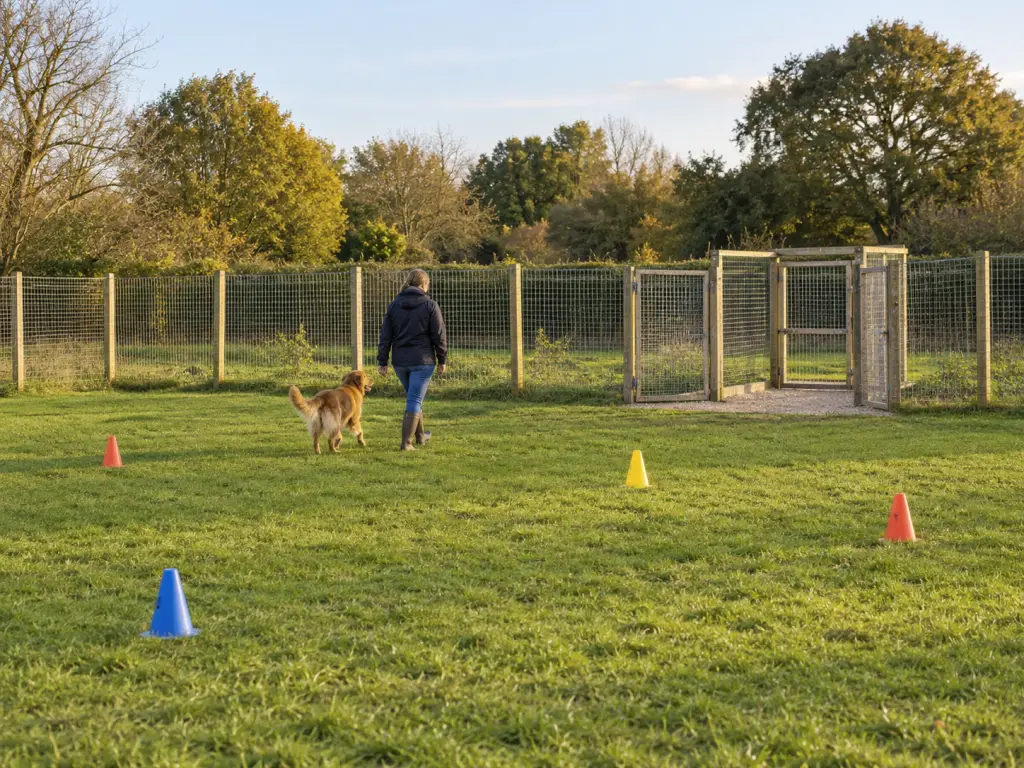
- Group cost: $330 a month
- 2 km from the complex
- Open daily, 4–9 p.m.
- Private 30-minute sessions
Shared Lawn Schedule
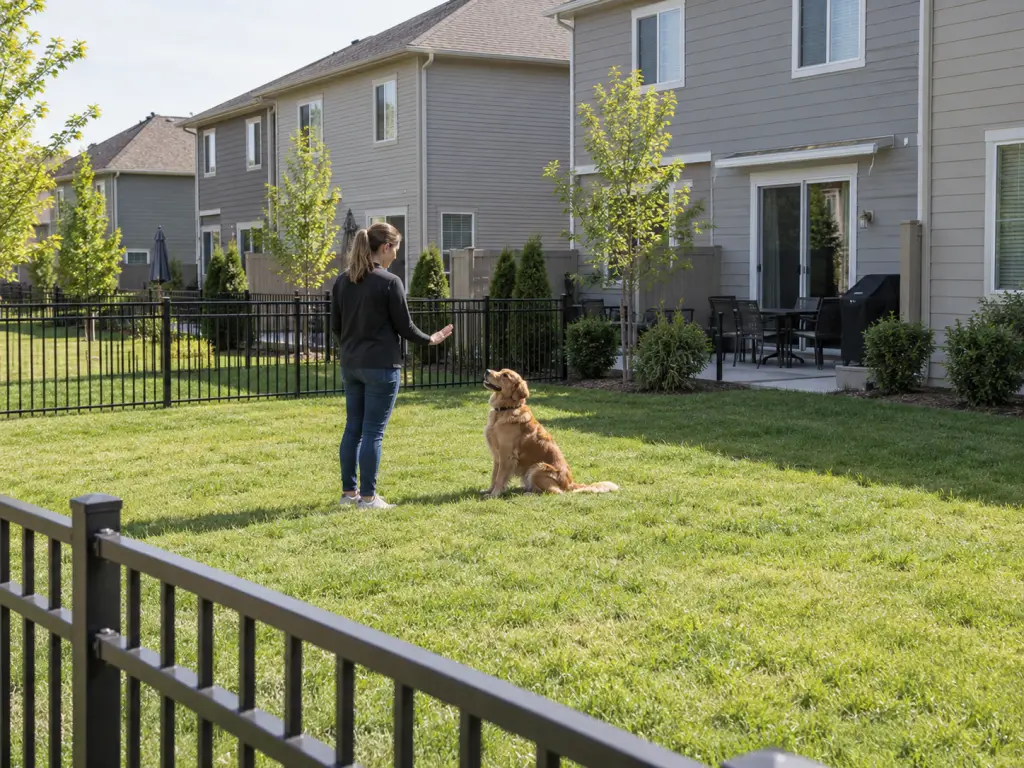
- Group cost: $90 a month
- Inside the townhouse complex
- Available weekdays, 7–8 a.m.
- Private 20-minute sessions
Your friend’s alternative
Neighbourhood Dog Run
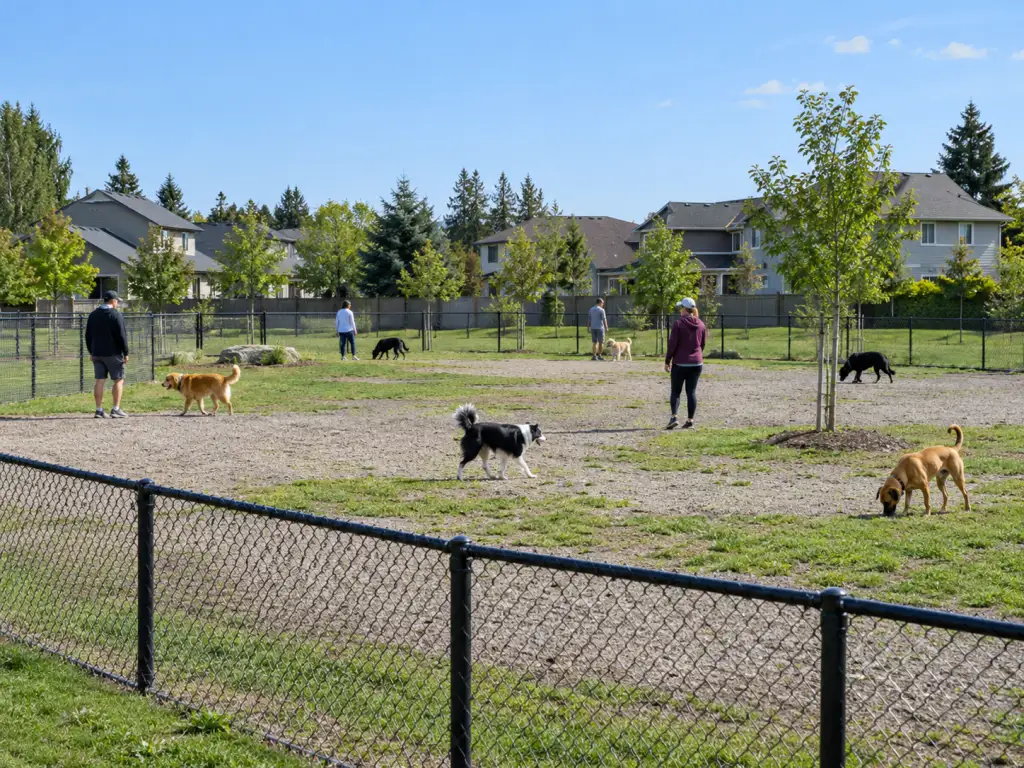
- Group cost: $180 a month
- 500 m from the complex
- Open daily, 6 a.m.–10 p.m.
- Shared access; no exclusive bookings
Your sister Gabriela recommends the Neighbourhood Dog Run because it is nearby, affordable and open longer. Persuade Gabriela that the arrangement you selected would better serve the six households and their dogs.
Model answers
These are transcripts of a model response, provided for comparison with your own recording.
The models choose Private Field Membership before responding to the friend’s alternative.
Level 7 sample answer
121 words
Gabriela, the dog run is closer, and $180 a month is a good price. But I think the Private Field Membership would work better. Um, two dogs are still learning around unfamiliar dogs. At the shared run, other dogs could make that practice harder. The field gives us a private sessions for thirty minutes, so each household could focus on its own dog. It's open from four until nine every day, which gives evening time for people who works during the day. The two-kilometre trip is less convenient, I agree. Still, the $330 cost is below our $360 limit. Both places keep dogs off our shared lawn on weekends, but the private field gives the group more control over each visit.
Why this answer is at level 7
This level 7 answer makes a clear choice and connects private sessions, evening access and cost to the group's needs. Compared with the higher-level answers, its reasoning is less developed, its vocabulary is simpler, and small grammar errors interrupt the flow.
Both places keep dogs off our shared lawn on weekends,
— Content/Coherence: This correctly identifies a benefit shared by both arrangements, keeping the comparison fair. A higher-level answer would connect this shared benefit more explicitly to why privacy becomes the deciding factor.other dogs could make that practice harder.
— Vocabulary: The wording communicates the problem clearly, but 'make that practice harder' is broad. The higher-level answers describe approaching dogs, managing distractions and the lack of exclusive bookings more precisely.The field gives us a private sessions for thirty minutes,
— Listenability: The listener can understand the benefit, but 'a private sessions' creates a grammatical stumble. The higher-level answers express the same booking advantage smoothly, allowing attention to stay on the argument.Still, the $330 cost is below our $360 limit.
— Task Fulfillment: This directly addresses the budget and supports the preferred arrangement. A higher-level answer also tackles Gabriela's affordability argument by explaining the additional cost per household and what that extra spending provides.
Level 9 sample answer
154 words
Gabriela, I agree that your suggestion wins on convenience. Five hundred metres is much closer than two kilometres, and the longer opening hours would be useful. Even so, I'd choose the Private Field Membership because it gives us something the shared run can't: a private half-hour session. Two dogs are still learning to respond around unfamiliar dogs. If another dog keeps approaching during practice, their handlers might spend most of the visit managing distractions. At the field, they could work at their own pace. The four-to-nine opening hours still cover evenings, which several households need, and both options preserve our shared lawn for everyone on weekends. The extra $150 a month is significant, but divided equally among six households, it would be $25 more each. We'd remain within the group budget, too. I think that balance could get everyone on board: less convenient travel in exchange for sessions that meet the different dogs' needs.
Why this answer is at level 9
This level 9 answer develops a persuasive comparison through a concrete training scenario, clear transitions and a useful household cost calculation. It is more fluent and specific than the level 7 answer; the level 11 answer adds more careful qualification and a more direct request for Gabriela's support.
If another dog keeps approaching during practice, their handlers might spend most of the visit managing distractions.
— Content/Coherence: This concrete scenario explains how shared access could reduce useful practice time. The level 11 answer develops the reasoning further by connecting that uncertainty directly to the absence of exclusive bookings.less convenient travel in exchange for sessions that meet the different dogs' needs.
— Vocabulary: The phrase neatly expresses the trade-off between distance and suitability. The level 11 answer uses more exact language about differing training conditions and avoiding demands on other users.Even so, I'd choose the Private Field Membership because it gives us something the shared run can't:
— Listenability: The transition smoothly moves from acknowledging Gabriela's advantages to presenting the main reason for choosing the field. The level 11 answer adds more varied sentence structures while maintaining an easy-to-follow argument.The extra $150 a month is significant, but divided equally among six households, it would be $25 more each.
— Task Fulfillment: This directly answers the affordability objection and makes the premium easier to assess. The level 11 answer also gives the remaining budget margin and explicitly asks Gabriela to support the choice.
Level 11 sample answer
171 words
Gabriela, the neighbourhood run is an appealing everyday option: it's only 500 metres away, costs $180 a month and offers much broader hours. For this group, though, I'd favour the Private Field Membership. Our challenge isn't simply finding somewhere dogs can exercise; it's accommodating households whose dogs currently need different conditions. With no exclusive bookings at the shared run, the two dogs learning to respond around unfamiliar dogs couldn't be guaranteed a session without those distractions. A private thirty-minute booking would let their handlers concentrate on practice without expecting other users to adjust their visits. The field's four-to-nine schedule accommodates evening access every day, and, like your suggestion, it keeps the shared lawn available on weekends. We'd pay $330, leaving $30 within the monthly limit. If divided equally, the additional $150 compared with the run would mean $25 per household. The two-kilometre journey is a genuine drawback, so I'd want everyone to consider it before committing. Would you support the field as the arrangement that gives all six households usable sessions?
Why this answer is at level 11
This level 11 answer combines a clear decision with precise reasoning about shared access, individual training needs and consideration for other users. It balances cost, evening availability and travel honestly, then closes with a direct request for Gabriela's support.
Our challenge isn't simply finding somewhere dogs can exercise; it's accommodating households whose dogs currently need different conditions.
— Content/Coherence: This establishes a clear decision principle for the whole comparison. The explanation that follows connects private bookings to the dogs' current needs, giving the argument a stronger organizing idea than convenience or price alone.without expecting other users to adjust their visits.
— Vocabulary: This precise phrase adds a practical social consideration: private practice lets handlers control their own sessions without asking shared-run users to accommodate them. It explains the value of exclusivity economically.For this group, though, I'd favour the Private Field Membership.
— Listenability: This short sentence provides a clear pivot after the opening acknowledgment of the run's advantages. Its direct wording helps listeners follow the choice before the answer moves into more complex reasoning.Would you support the field as the arrangement that gives all six households usable sessions?
— Task Fulfillment: The closing question directly invites Gabriela's agreement and ties the recommendation back to the whole group. It completes the persuasive exchange after the answer has addressed her concerns about distance, cost and opening hours.
What moves an answer from 7 to 9 to 11
These are model answers written to show each level. The labels are practice estimates, not examiner scores.
Make your chosen option clear and compare it with the friend’s alternative using the stated facts. Explain how those differences meet your needs and persuade the listener respectfully.
- Content/Coherence: Level 7 models communicate the main ideas; level 9 models develop relevant details with clear connections; level 11 models sustain precise, well-integrated development.
- Vocabulary: Compare adequate everyday wording with more varied, accurate choices at level 9 and flexible, precise expression at level 11.
- Listenability: Higher-level delivery needs clear pronunciation, rhythm, intonation and controlled pauses. Transcripts suggest phrasing and organisation, but cannot demonstrate these audio features; a recording is needed.
- Task Fulfillment: Compare how fully the response addresses the request, develops enough relevant detail and maintains an appropriate tone for the audience within the task limits.
Assess the criteria together. A longer answer or rarer words alone do not establish a higher level.
Answer this question and get your level
More Task 5 questions
- Borrowing Tools After Work
- A Birthday Tribute From Everyone
- Room for Visiting Relatives
- Childcare at a Family Gathering
- Getting a Friend Moved
- An Activity Across Generations
All speaking Task 5 sample questions · Read the Task 5 guide